Is AI Changing Art Forever or Quietly Destroying It?
Introduction
Art has always been shaped by imagination, personal perspective, and lived moments. Every era has introduced new tools that influenced how creative work is produced, but the current shift feels fundamentally different. Artificial intelligence can now generate images within seconds, prompting serious discussion about the future of artistic expression.
AI-generated visuals are appearing rapidly across social media, advertising, and creative industries. Many see this as an exciting development that makes visual creation faster and more accessible. At the same time, artists and collectors are questioning its deeper influence. Traditionally, art has been valued for intention, effort, and the presence of the creator behind the work—qualities technology does not naturally possess.
This tension has sparked an important conversation within the art world. To understand whether AI is reshaping art or simply redefining its tools, it is necessary to examine how this technology functions and how it differs from human-led creation.
How AI Creates Art — Not Like Humans Do
AI produces visuals through computational systems rather than personal insight. It analyses large collections of images and styles, then generates new results by identifying patterns and probabilities. This process allows speed and efficiency, but it operates without personal reference or internal motivation.
Human creators often begin with observation, belief, or reflection. Their work develops through intention and interpretation over time. AI, by contrast, responds only to instructions and available data.
Because of this, AI-generated visuals are built through recognition rather than lived understanding. The strength of the final outcome depends largely on how thoughtfully the tool is directed and refined by the person using it.

Velvet Drift by Mexico Majestica | Statement Art Painting – TravelArty
How AI Is Changing the Art Environment
AI is altering the conditions under which art is produced and consumed. Earlier, creating visual work required time, training, and sustained commitment. Today, advanced tools allow images to be generated almost instantly, even without formal artistic practice.
This shift has widened access but has also accelerated output. Visual content now circulates at a pace that was previously unimaginable, changing how audiences engage with creative work.
Many artworks are viewed briefly before attention moves elsewhere. In this fast-moving environment, creative work risks being treated as short-term content rather than something meant for deeper engagement.
The Impact on Human Artists
For many creators, AI introduces uncertainty. When visuals can be generated instantly, the labour and discipline behind human-made work can feel less visible—especially in commercial spaces driven by speed and efficiency.
Yet human artists continue to offer what technology cannot replicate. Individual perspective, cultural understanding, intuition, and conscious decision-making remain distinctly human strengths.
Creators who prioritise concept, narrative, and originality are still able to produce work that stands apart. The challenge lies not in being replaced, but in redefining value within a changing creative landscape.
Is AI Weakening the Meaning of Art?
AI does not remove meaning from art, but it does challenge how meaning is perceived. Historically, creative work gained significance through process, dedication, and the visible presence of the artist. Instant image generation can weaken this connection if context is ignored.
Audiences are now exposed to a constant stream of visuals, reducing the time spent engaging with individual works. When viewing becomes rapid and continuous, thoughtful interpretation becomes harder to sustain.

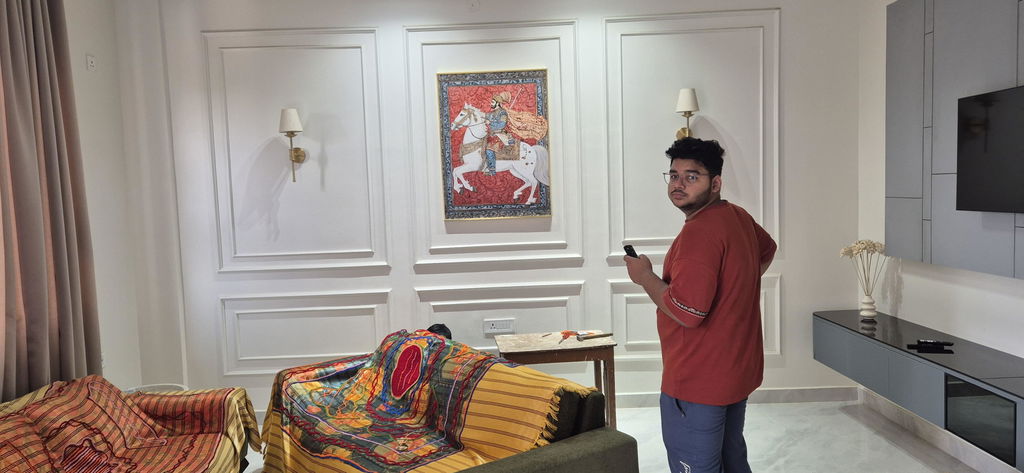
Midnight Stallion Glow (Canvas Oil Painting - 120X80 cm) – TravelArty
Still, meaning in art has always evolved. AI is pushing both creators and viewers to become more intentional about context, depth, and purpose.
AI Should Support Creativity, Not Replace It
AI functions best as a supporting tool rather than a guiding force. It offers efficiency, variation, and technical assistance, but it does not establish direction or intent.
When used carefully, it can expand possibilities and reduce technical barriers, allowing creators to focus more on ideas and refinement.
The responsibility for shaping significance remains human. When technology serves creative vision instead of defining it, artistic integrity is preserved.
Final Perspective
AI represents a turning point rather than an ending in the history of art. It is reshaping how creative work is produced and distributed, but it does not redefine why art exists.
As long as creators continue to make deliberate choices and engage with ideas beyond surface-level results, art will remain driven by human insight—supported by technology, not replaced by it.